The tub itself arrives on a pallet. The part that makes it safe to sit in is the electrical work — and it's one of the most regulated residential jobs in the code book, for good reason. If you're pricing a hot tub anywhere in North Jersey, here's what the wiring side involves.
A dedicated 240V circuit
Most full-size spas need their own 50A or 60A, 240-volt circuit run straight from the panel — nothing else on it. That's roughly the load of an electric range running continuously, which is also why the first thing we check is whether your panel has the capacity at all. Older 100A services often don't.
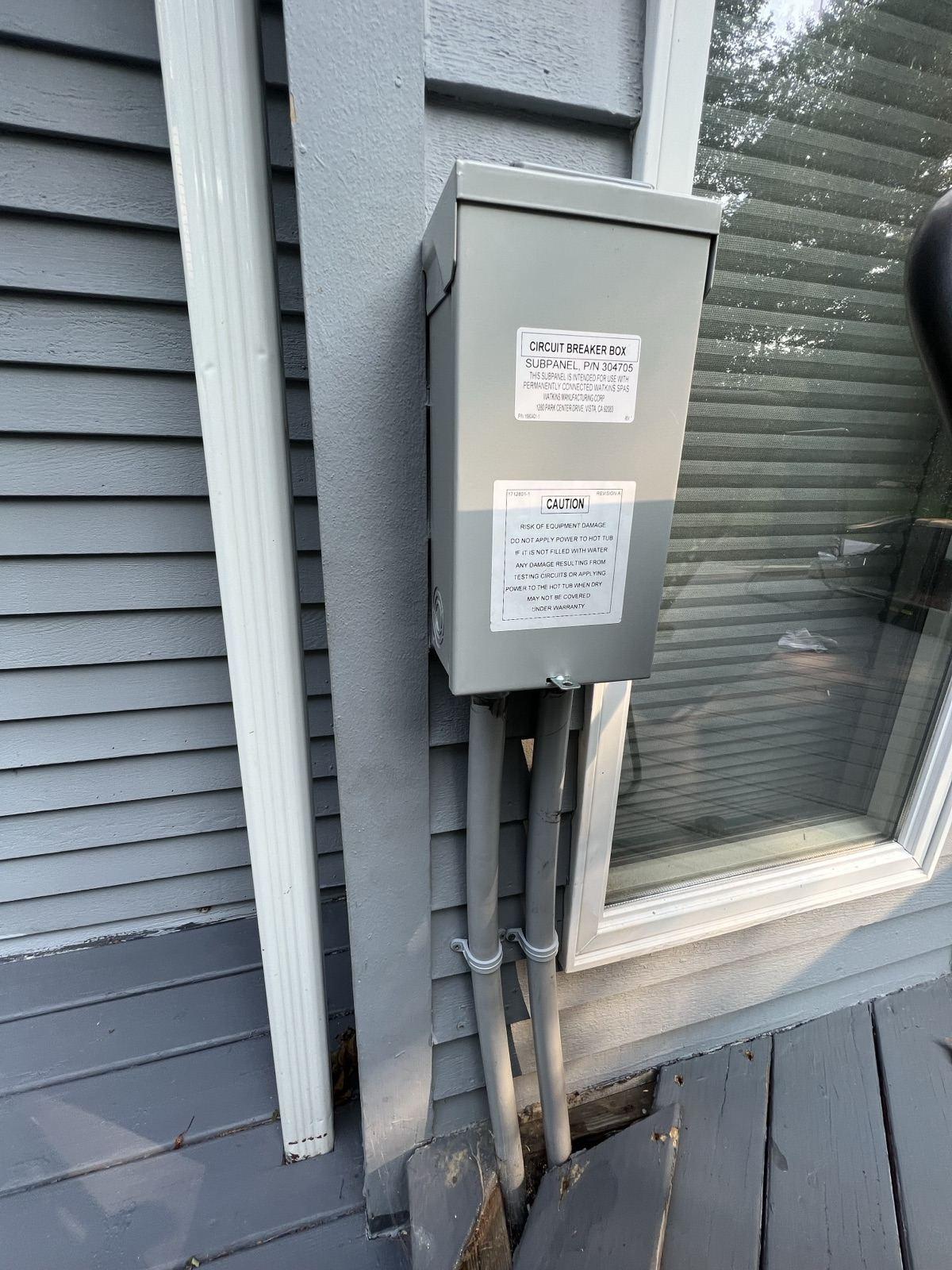
The disconnect box
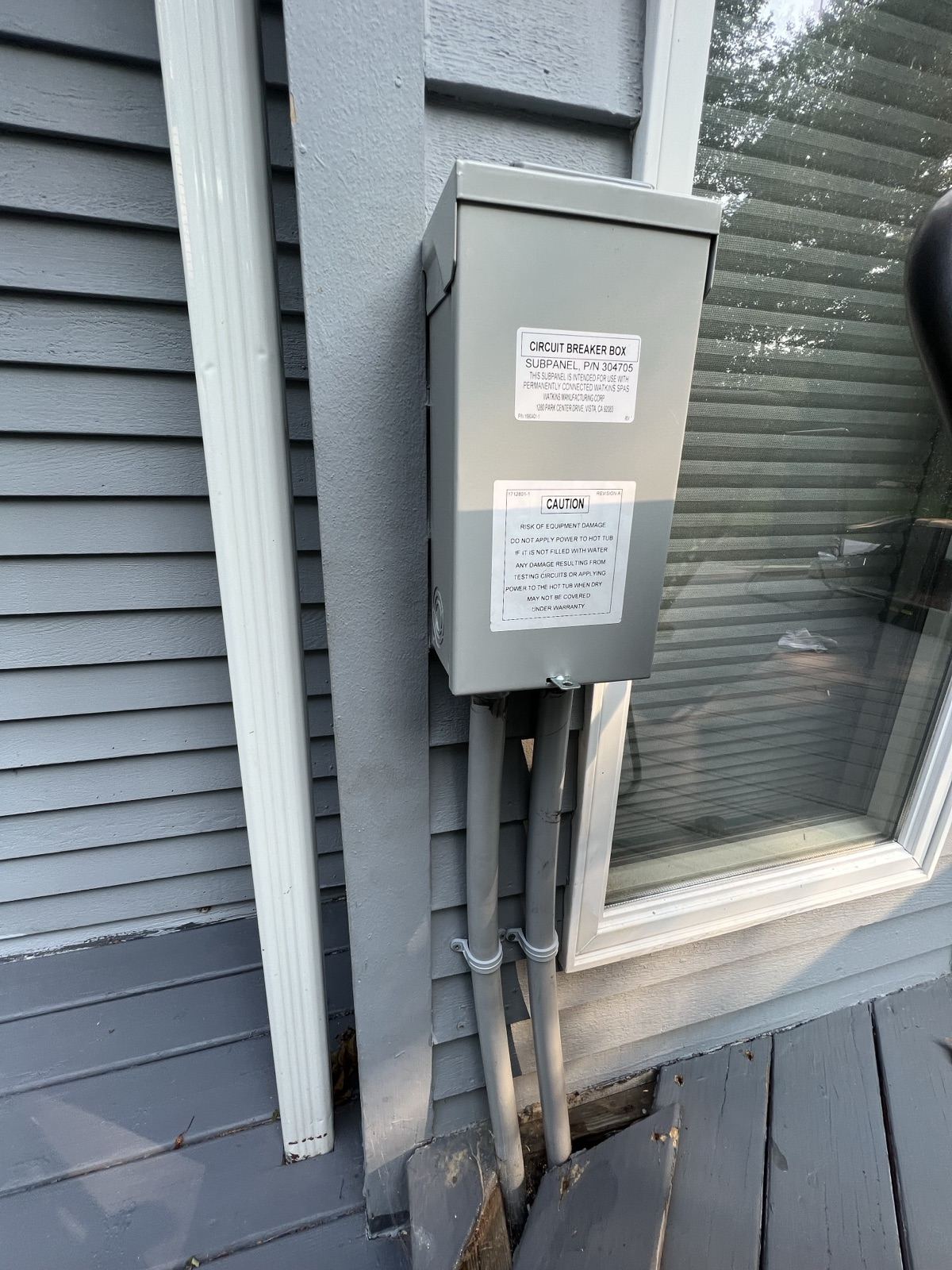
Code requires a GFCI disconnect within sight of the tub but at least five feet away — close enough to shut things down fast, far enough that nobody can reach it from the water. This is the gray box you see near every properly wired spa, and it protects the entire tub, not just one outlet.
Bonding, trenching, and burial depth
Everything conductive around the spa gets bonded together so no two surfaces can sit at different voltages. The feed itself usually runs underground in conduit, at a code-specified burial depth. Digging the trench once and doing it right matters — it's also the cheapest moment to drop in a spare conduit for future landscape lighting or an outbuilding.
Yes, it needs a permit
Hot tub circuits are permitted and inspected work in New Jersey — the inspector will look at the disconnect distance, GFCI protection, bonding, and burial depth. We pull the permit and meet the inspector so the process costs you nothing but a signature.
If you bought a house with an existing hot tub, it's worth a one-time inspection of the hookup. We regularly find spas fed by undersized wire, missing disconnects, or no bonding at all.
Planning a spa this season? See our hot tub & spa wiring service or book a free estimate and we'll check your panel capacity first.