During the copper shortage of the mid-60s to early 70s, a lot of builders ran aluminum wire for ordinary outlet and light circuits. That construction wave built much of our service area — the high-rises along the Fort Lee and Cliffside Park palisades and plenty of split-levels inland. If your building dates to 1965–1973, this one's for you.
The problem isn't the wire — it's the connections
Aluminum conducts fine. But it expands and contracts more than copper, and it oxidizes. At every screw terminal — every outlet, switch, and splice — those two habits slowly loosen the connection. A loose connection builds resistance, resistance builds heat, and heat at a receptacle behind a couch is exactly how electrical fires start. The federal CPSC found homes with original aluminum branch wiring are dramatically more likely to have a fire-hazard connection than copper-wired homes.
Signs worth taking seriously
Warm or discolored outlet and switch plates, a faint plastic smell near an outlet, lights that flicker when nothing changed, or outlets that work intermittently. Any of these in a 60s–70s home justifies an inspection — and an outlet that's warm to the touch justifies a call today.
Don't put a standard copper-rated outlet or switch on aluminum wire, and don't let a handyman do it either. Mixing the wrong device with aluminum conductors is precisely the failure mode that causes fires.
The real fixes
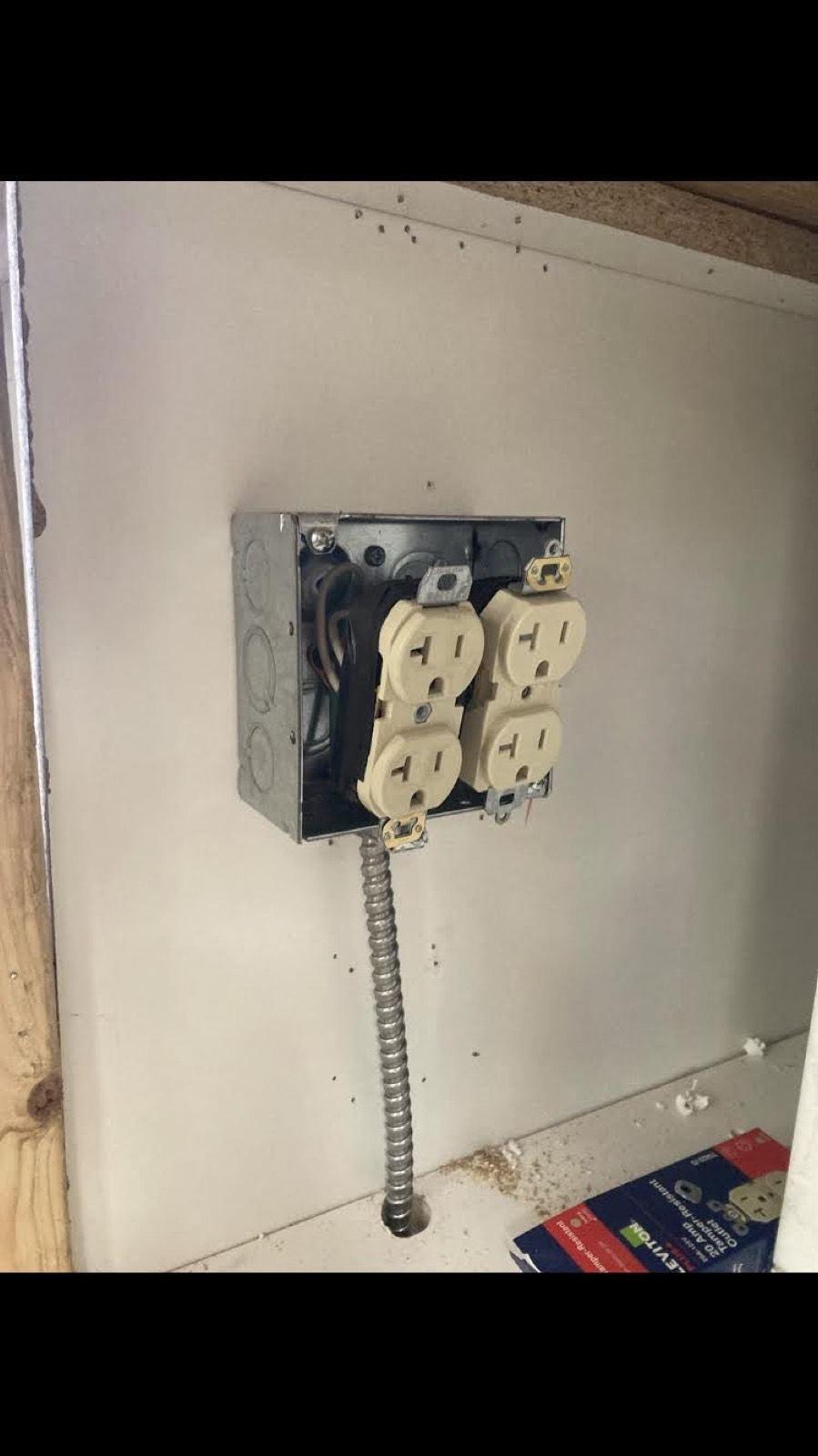
There are three honest options: connection-by-connection remediation with rated connectors (the industry-accepted repair), replacing devices with CO/ALR-rated outlets and switches, or rewiring in copper during a renovation. Which one makes sense depends on the home, and it's also something insurers increasingly ask about — several NJ carriers want documentation that aluminum wiring has been remediated before writing a policy.
Not sure what's behind your walls? It takes us minutes to check at the panel. See our electrical repair service or book a free estimate.